
Philippine apparel sourcing guide
Import apparel from the Philippines to Netherlands
Buyers importing apparel from the Philippines to Netherlands can source blank shirts and custom OEM/ODM garments directly from PHShirt. We prepare commercial documentation for the agreed Incoterm and coordinate freight from the Philippines toward Amsterdam and other commercial centers in Netherlands. Final duties, permits, labelling, and product-safety obligations should be confirmed with a licensed broker or competent authority before shipment.
- 5 blank brandsYalex · A2Z · Crown · Softex · Blackhorse
- EU export deskREACH · GSP+ · EU 1007/2011 labelling
- 5 branchesTagum · Davao · CDO · Zamboanga · Manila
- Sample order≤5 pcs · paid · ships in 7 days
Sample of what we ship to Netherlands
Custom embroidery and OEM cuts from our Philippine production line, packed to EU labelling rules.
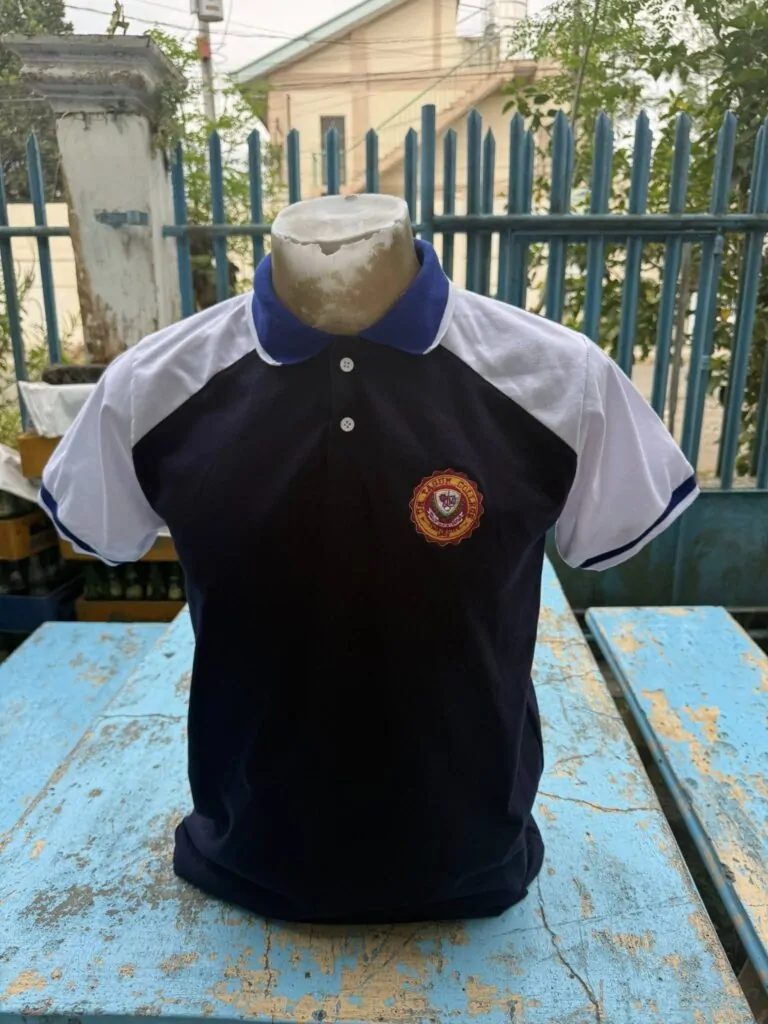 Custom-embroidered polo · 240 GSM combed cotton
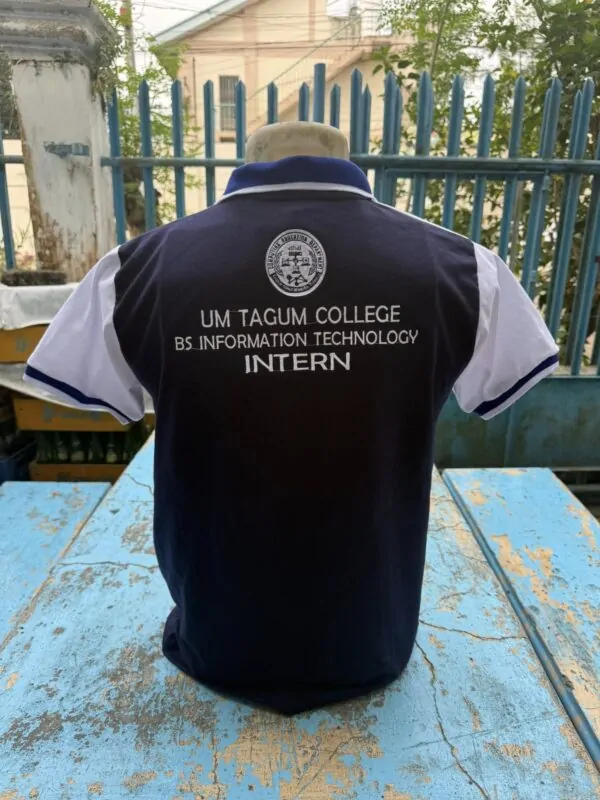 Detail of chest placement · OEKO-TEX reactive dyes
Why source apparel from the Philippines?
PHShirt combines export-ready garment production with direct access to established blank-shirt brands. Buyers can source Yalex, A2Z, Crown, Softex, and Blackhorse blanks or commission OEM/ODM runs with custom fabric, sizing, labels, printing, embroidery, and packaging.
- Flexible productionBlank-stock fulfillment and custom manufacturing from one supplier.
- Document coordinationCommercial invoice, packing list, and origin documents prepared to the agreed shipment.
- Human export supportOne sales contact from specification review through dispatch.
Philippines to Netherlands Shipping Corridors & Ports
Direct ocean line-haul services and scheduled air-cargo flights connecting Philippine manufacturing hubs directly to the Netherlands and the Benelux logistics network.
Major International Seaports (Ocean Container Gateways)
Containerized FCL and LCL apparel cargo ships out of dedicated Philippine container terminals and enters the Netherlands through Europe's largest deep-water ocean port facilities and inland waterway corridors.
Philippines Departure Seaports
Origin Hubs- Davao International Container Port (DICT) PHDVO / PHDIC
Premier modern deep-water container terminal in Panabo City, Davao Gulf. Features a 15-meter natural draft accommodating post-Panamax vessels. Operates direct scheduled weekly feeder loops connecting into European line-haul container services to Rotterdam for Mindanao apparel shipments.
- Port of Manila (MICT & South Harbor) PHMNL
Largest international container gateway in the Philippines, processing over 4.5 million TEUs annually. Offers high-frequency feeder sailings and direct mother vessel connections linking Philippine garment production lines to Rotterdam.
- Cebu International Port (CIP) PHCEB
Central Visayas maritime cargo consolidation hub linking garment manufacturing plants in Mactan and Cebu export processing zones with international feeder loops.
- Batangas International Port PHBTG
Alternative deep-water container terminal in Southern Luzon serving Calabarzon industrial estates with direct highway links bypassing Metro Manila traffic.
- Subic Bay International Container Port (NCT) PHSFS
Strategic deep-water Freeport container terminal serving Central and Northern Luzon industrial estates with dedicated highway transit and rapid customs dispatch.
Netherlands Arrival Seaports
Destination Hubs- Port of Rotterdam (Maasvlakte ECT Delta, RWG & APMT) NLRTM
Europe's largest seaport handling over 14.5 million TEUs annually. Operates premier deep-water container terminals (ECT Delta, Rotterdam World Gateway, APM Terminals Maasvlakte II) capable of accommodating 24,000+ TEU mega-vessels with direct electrified Betuweroute rail and Rhine-Meuse inland barge links across Europe.
- Port of Amsterdam (Westpoort Logistics Hub) NLAMS
Western Europe's fourth-largest port located along the North Sea Canal. Serves the Amsterdam Metropolitan Area and Randstad retail distribution corridors with integrated multimodal short-sea, barge, and road connections.
- Port of Moerdijk NLMOE
Strategic inland container and short-sea terminal located between Rotterdam and Antwerp, offering short-sea connections and extensive warehousing for Benelux retail distribution.
- Port of Vlissingen (North Sea Port) NLVLI
Deep-water tidal port on the Western Scheldt, part of the cross-border North Sea Port alliance providing uncongested container handling and bonded logistics space.
Major International Airports (Air Cargo Gateways)
Time-critical fashion launches, event merchandise, pre-production size sets, and high-value orders fly directly between Philippine cargo gateways and Dutch international air cargo hubs.
Philippines Departure Airports
Origin Air Cargo- Davao Francisco Bangoy International Airport (DVO) DVO / RPMD
Primary air cargo facility for Southern Mindanao. Features regular widebody domestic bellyhold cargo feeding into Manila (MNL) for consolidated international air waybills connecting directly to the Netherlands.
- Ninoy Aquino International Airport (NAIA / MNL) MNL / RPLL
National air cargo flagship in Metro Manila. Connects air freight shipments to Amsterdam Schiphol via scheduled widebody services and freighters operated through Singapore, Dubai (Emirates SkyCargo), Doha (Qatar Airways Cargo), and European hubs.
- Clark International Airport (CRK) CRK / RPLC
Major express freight hub hosting dedicated international integrator facilities (FedEx, UPS, DHL). Features 24/7 freighter ramp handling and rapid customs clearance for Northern Luzon.
- Mactan-Cebu International Airport (CEB) CEB / RPVM
Central Visayas air cargo gateway linking garment producers to international airline networks through transshipment via Singapore (SIN) and Hong Kong (HKG).
Netherlands Arrival Airports
Destination Air Cargo- Amsterdam Airport Schiphol (AMS / EHAM) AMS / EHAM
Europe's third-largest air cargo hub (Schiphol Cargo City) handling over 1.4 million metric tons of freight annually. Features direct main-deck freighter connections, dedicated fashion logistics facilities, and 24/7 electronic customs clearance via Dutch Customs (Douane).
- Maastricht Aachen Airport (MST / EHBK) MST / EHBK
Premier dedicated freight airport in the southern Netherlands, offering rapid turnarounds, no slot constraints, and strategic road distribution across the Benelux, Germany, and northern France.
- Eindhoven Airport (EIN / EHEH) EIN / EHEH
Brainport Eindhoven region commercial airport handling regional air express cargo, sample consignments, and urgent corporate merchandise.
Philippines to Netherlands Freight Planning Summary
Landed-cost & Trade Framework for Netherlands
A reliable landed-cost estimate needs the final garment specification, quantity, packing dimensions, HS classification, Incoterm, destination, and delivery mode. Below: the framework variables and an indicative sample basket with line-item math.
- Trade Framework
- EU GSP+ (Generalized Scheme of Preferences) / EFTA Trade Rules
- Duty & Customs Guide
- Philippines benefits from EU GSP+ zero-duty status on eligible apparel lines. Compliance required with EU REACH chemical safety and Textile Labelling Regulation (EU) No 1007/2011.
- Recommended Fabrics
- Medium to heavyweight 180-240 GSM combed cotton, CVC fleece for autumn/winter lines, and OEKO-TEX certified reactive dyes.
- Destination currency
- Euro (EUR)
- Freight variables
- Chargeable weight or cubic volume, fuel and security surcharges, terminal fees, brokerage, insurance, and inland delivery.
Sample basket
Indicative landed-cost - 500 polos + 300 blanks to Rotterdam
For a Dutch SMB importer. CIF Rotterdam, EUR. Rates fluctuate with carrier, season, fuel surcharges, and Incoterm - your final PHShirt quotation identifies the named place and confirms each line.
| Line item | Calculation | EUR |
|---|---|---|
| 500 × custom polo (200 GSM combed cotton, OEKO-TEX, left-chest embroidery, FOB Manila) | 500 × ~€3.40/pc | €1,700 |
| 300 × blank T-shirt (180 GSM combed cotton, FOB Manila) | 300 × ~€1.90/pc | €570 |
| FOB Manila ex-works subtotal | €2,270 | |
| LCL ocean freight Manila → Rotterdam (≈0.8 CBM, 28–45 days) | ~€60/CBM | €48 |
| Marine cargo insurance (0.3% of CIF) | 0.3% × ~€2,320 | €7 |
| EU import duty under GSP+ (TARIC 6109/6110/6205 cotton apparel, preferential 0%) | 0% × CIF | €0 |
| EU customs broker fee (flat, single shipment) | ~€100 | €100 |
| CIF Rotterdam ex-VAT subtotal | €2,425 | |
| NL import VAT (21% on CIF, recoverable for VAT-registered buyers) | 21% × €2,425 | €509 |
| Inland delivery Rotterdam → buyer city (pallet, NL/BE) | ~€0.55/pc × 800 | €440 |
| DDP indicative landed cost | ≈ €3,375 | |
| Indicative per-piece (blended, ex-VAT if recoverable) | €2,825 ÷ 800 | ~€3.53/pc |
Two drivers dominate the per-piece number: FOB garment cost (60%) and inland EU delivery (13%). Doubling the basket to ~1,600 pcs typically cuts per-piece landed cost by 8–14% through volume pricing on FOB and a denser pallet. Ask PHShirt for a tailored DDP Rotterdam quotation with your garment spec, quantity, and delivery postcode.
Compliance checkpoints for Netherlands
These checkpoints are planning prompts, not a substitute for a binding tariff ruling or legal advice. Confirm the exact product scope before production labels and packaging are approved.
- EU GSP+ origin claim: Philippine exporters must be REX-registered (Registered Exporter system) and the commercial invoice must carry the REX statement for 0% preferential duty under GSP+; verify renewal status with DG TAXUD before contracting.
- Textile labelling (EU) No 1007/2011: fibre composition, country of origin, and care instructions on every garment; Dutch importers typically expect labels in Dutch plus English or French.
- REACH chemical safety: OEKO-TEX Standard 100 or equivalent third-party test report covering azo dyes, formaldehyde, heavy metals, and phthalates; buyers in NL frequently request this in writing.
- Dutch Customs (Douane): entry summary declaration (ENS) at Rotterdam via validated EORI number, AGS / NCTS filing by broker, and Article 23 customs representation agreement if PHShirt files on the buyer's behalf.
- CBI (Centre for the Promotion of Imports from developing countries): Dutch-government programme that matches EU buyers with GSP+ suppliers in the Philippines; useful first-call for new buyers seeking validated partners.
- Product safety and CE marking: not required for basic finished apparel under EU Regulation 1007/2011, but mandatory for protective workwear and safety garments under PPE Regulation (EU) 2016/425. Review our technical guide to CE certification for apparel.
HS classification starting points
Most apparel begins in EU TARIC Chapter 61 (knitted or crocheted) or Chapter 62 (woven). Fiber composition, knit versus woven construction, gender, garment type, and intended use determine the final 10-digit TARIC line. The 8-digit CN codes below are the most common planning prompts for Philippine-origin apparel imported into Netherlands; your licensed broker or the Dutch Customs Tariff database confirms the final tariff line.
- 6109 10 00 - Cotton T-shirts, singlets and other vests, knitted or crocheted (Chapter 61)
- 6110 20 10 - Cotton jerseys, pullovers, sweatshirts and similar articles, knitted or crocheted (Chapter 61)
- 6203 42 00 - Cotton trousers, bib and brace overalls, breeches and shorts, woven, men's or boys' (Chapter 62)
- 6205 20 00 - Cotton men's or boys' shirts, woven (Chapter 62)
Cotton apparel lines carry a 12% MFN duty. As a GSP+ beneficiary the Philippines currently exports many apparel lines to the EU at 0% preferential duty, subject to the EU's REX (Registered Exporter) origin system and the GSP+ renewal schedule; verify current status with a licensed broker before contracting.
Documents commonly prepared
Document requirements vary by buyer, carrier, bank, customs authority, and trade arrangement.
- 01Commercial invoiceSeller, buyer, goods, values, currency, Incoterm, and payment details.
- 02Packing listCartons, quantities, sizes, net and gross weight, and dimensions.
- 03Transport documentBill of lading, sea waybill, or air waybill issued for the shipment.
- 04Supporting certificatesOrigin, testing, inspection, or preferential documents when required.
MOQ, timing, and payment
Production starts after specification, sample or artwork, price, payment, and delivery terms are approved in writing.
- Minimum order
- 50 pieces per design for custom production; blank-stock MOQs depend on brand, color, and size mix
- Production lead time
- 3–6 weeks after sample, artwork, and payment approval; shipping time is additional
- Typical payment structure
- Bank transfer; documentary collection or letter of credit may be agreed for qualified larger orders
Importing from the Philippines to Netherlands: FAQ
Answers for early-stage sourcing. Your quotation will state the commercial terms that apply to the actual order.
What is the minimum order for shipping apparel to Netherlands?
50 pieces per design for custom production, sizes mixed freely within the MOQ; blank-stock MOQs depend on the brand, colour count, and size mix you need.
Custom-woven labels (your own brand label on the inside neck) carry their own 100 pcs per colourway minimum because label looms have fixed setup costs. Custom-dyed fabric is a separate MOQ of 50 pcs per colourway. If you need a first drop of 4 colours × ~13 pieces, ask PHShirt about working from certified stock fabric - split colours from the same roll are runnable.
Sample runs are 1–5 pieces at paid sample fee, fully credited against your bulk order. We do not publish a single fixed unit price because fabric, weight, decoration, and colourway count all move the number; send your spec and quantity and we quote every tier in one email.
How long does shipping from the Philippines to Netherlands take?
Plan for 28–45 days of sea transit Manila → Rotterdam via the Cape of Good Hope (Red Sea diversions continue through 2026). Total door-to-door for a Dutch importer typically runs 35–55 days once production is finished.
Production lead time is 30–45 days after sample, artwork, and payment approval. Sample turnaround is 7–12 business days. Reorders run faster - 10–15 days once the spec is locked in your file.
Carrier schedules, customs, transshipment, and inland delivery can extend the timeline by 1–2 weeks. Peak season (August–October) tightens vessel space and lifts spot freight rates 40–80% - book 2–3 weeks ahead if your date is fixed. LCL consolidation adds 2–5 days versus FCL.
Which HS codes commonly apply to apparel imported into Netherlands?
Knitted cotton apparel lands in EU TARIC Chapter 61. The most common lines for Philippine-origin blanks and custom OEM are 6109 10 00 (cotton T-shirts, singlets, vests), 6110 20 10 (cotton pullovers, sweatshirts), and 6104 / 6106 for women's knits.
Woven apparel lands in Chapter 62: 6203 42 00 (cotton trousers, men's and boys') and 6205 20 00 (cotton men's and boys' shirts) cover the most-frequent woven categories. Polyester garments use 6109 90 / 6203 43 codes instead.
The 6-digit HS code is identical worldwide; the EU extends to an 8-digit CN code and a 10-digit TARIC code with member-state measures. A licensed broker - or the Dutch Customs Tariff database - confirms the final line from garment construction, fibre content, intended use, and current EU measures.
Can PHShirt supply custom labels and packaging for Netherlands?
Yes. OEM/ODM orders can include buyer-approved size labels, care labels, brand labels, hangtags, folding, polybags, and carton marks. We knit, cut, sew, decorate, and label in one facility, so the entire label stack is sourced together rather than assembled from multiple subcontractors.
For the Dutch market the typical label stack includes fibre composition and origin in Dutch or English (EU Textile Labelling Regulation (EU) No 1007/2011), care symbols per ISO 3758, and any private-label branding you require. Sample runs of any label variant are fully credited against your bulk order.
Custom packaging (hangers, belly bands, individual polybags with euro-slot, FSC-certified outer cartons) is supported on orders typically above 500 pieces; below that threshold, standard bulk-carton packing is more cost-efficient.
Which Incoterms can be quoted?
PHShirt can quote the common Incoterms 2020 terms - EXW (ex-works Tagum or Manila), FCA (free carrier at named place), FOB (free on board Manila), CFR (cost and freight to Rotterdam), CIF (cost, insurance and freight to Rotterdam), and DAP or DDP (delivered to your named NL city).
The final quotation identifies the named place and the Incoterms 2020 rule that applies. EXW is the lowest-cost baseline; FOB is the most common for first-time buyers; DDP is the right call when you want a single all-in landed number without managing the broker and inland leg.
For first orders under 1 CBM we typically quote LCL; from about 14 CBM upward, FCL becomes more cost-efficient. Ask us for both forms so you can compare true landed cost rather than just the factory-gate price.
Request a Netherlands import quote
Tell us your garment type, quantity, and target delivery date. We'll respond same-day with a planning brief, sample options, and a freight outline. Your details go straight to our export desk - no generic inbox.
Discuss a shipment to Netherlands
Send your garment type, quantity, sizes, decoration method, target delivery date, and destination city.